

Yellow Low-Light Lens Simulator
Experience the world through Yellow Low-Light lenses. It enhances clarity and contrast for superior visual comfort.
Drag the slider to compare how the scene looks with no lens vs. with the selected lens.
Experience the world through Yellow Low-Light lenses. It enhances clarity and contrast for superior visual comfort.
Yellow Low-Light Tint for Flat-Light Days
Choose an amber low-light lens when the light goes flat—overcast afternoons, foggy trails, or dusk commutes. The vivid yellow tone is designed to sharpen detail and boost contrast, so the view feels brighter and more defined.
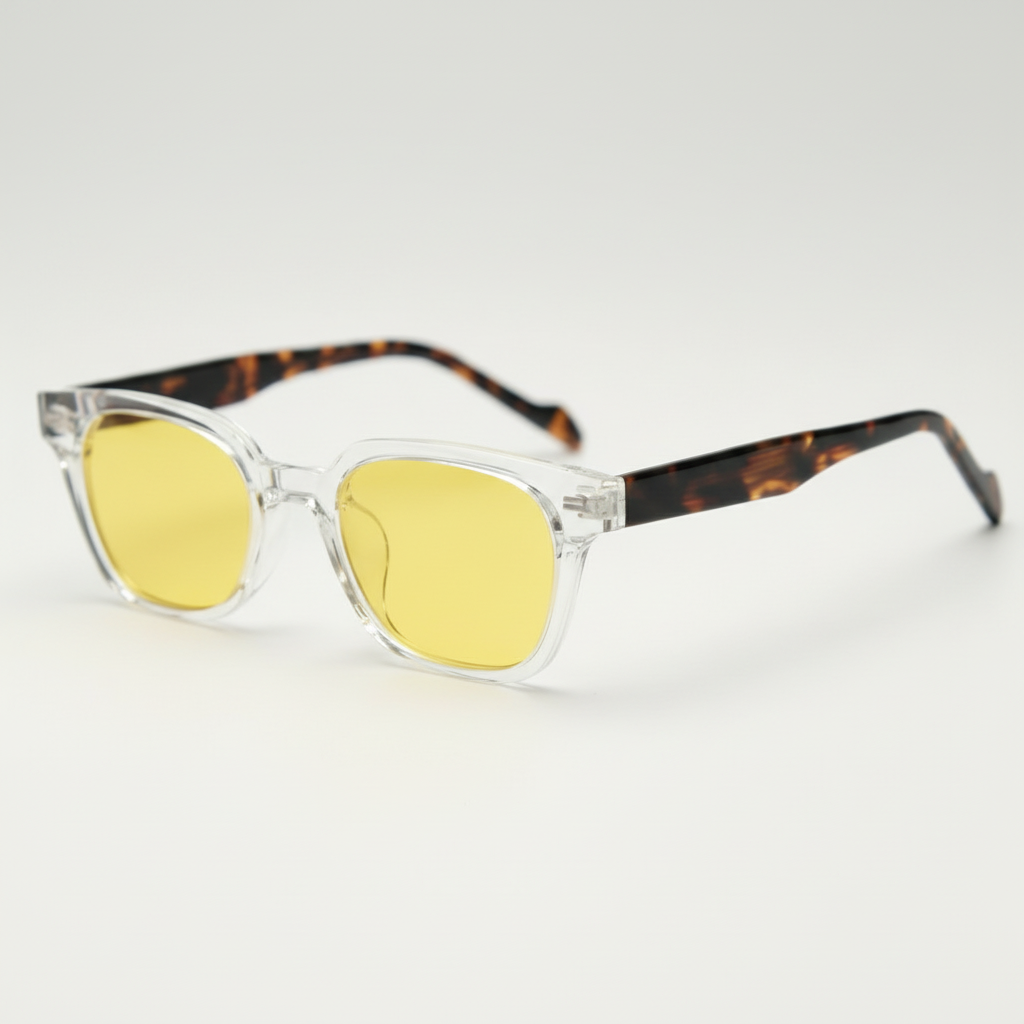
Paired with Dana in Clear, the transparent acetate square/Wellington frame keeps the look crisp and lightweight, while UV400 / 100% UVA/UVB protection covers everyday outdoor wear.
- Frame: Dana in Clear — a Wellington-inspired square silhouette in transparent acetate with a subtle keyhole bridge and polished edges.
- Lens: Yellow Low-Light — a vivid yellow tint made to enhance contrast in overcast and low-light conditions, helping details feel clearer in haze or flat lighting.
- Best For: Overcast afternoons, dusk commutes, and low-light outdoor moments (including night driving when contrast drops).
- Protection: UV400 / 100% UVA/UVB protection.
- Measurements: Lens width 52 mm; bridge 22 mm; temple 150 mm; lens height 45 mm; frame width 148 mm.
Yellow Tinted Lens
- Enhance contrast in overcast and low-light conditions
- Sharpen detail for haze, fog, and flat lighting
- Brighten your view with a vivid yellow tint
- Block UV for reliable all-day protection


Clear Square Acetate Frame
- Clear acetate frame: Crystal transparency keeps square glasses light and polished under daylight or studio light.
- Keyhole bridge feel: Smooth temple tips and sturdy hinge make clear frames easy for long days.
- Vintage styling: Works with trench coats or tees for gallery nights and riverfront walks.
Details
Details
Frame Details
- Brand
- TXOME
- Gender
- Women
- Frame Color
- Clear
- Frame Shape
- Square
- Size
- Large (L)
- Frame Style
- Vintage-inspired
- Frame Type
- Full rim
- Hinge Type
- Standard hinge
- Frame Material
- Acetate
- Frame Weight
- 25 g
Prescription Details
- Prescription Range
- SPH: -12.00 to +12.00
CYL: -6.00 to +6.00 - Progressive Compatibility
- Yes
- PD Range
- 55 to 82 mm
Lens Details
- Color
- Yellow
- Polarization
- Non-polarized
- UV Protection
- UV400 / 100% UVA/UVB
- Filter Category
- Cat. 1
- Lens Material
- CR-39
 Bridge
22 mm
0.87 in
Lens Width
52 mm
2.05 in
Lens Height
45 mm
1.77 in
Frame Width
148 mm
5.83 in
Bridge
22 mm
0.87 in
Lens Width
52 mm
2.05 in
Lens Height
45 mm
1.77 in
Frame Width
148 mm
5.83 in
 Temple Length
150 mm
5.91 in
Temple Length
150 mm
5.91 in
Discounts


FAQ
What are Yellow Low-Light (night driving) lenses?
What are Yellow Low-Light (night driving) lenses?
Yellow Low-Light lenses are a light yellow tint designed for low-light driving and flat lighting conditions. The warm tint can make the road scene feel higher-contrast in situations like dusk, rain, fog, or overcast weather.
They are not a "magic" glare eliminator, but many drivers find the view feels clearer and less harsh than wearing a dark sun tint in low light.
When should I wear yellow night driving glasses?
When should I wear yellow night driving glasses?
They're best for driving in low-light or low-contrast conditions-dusk and dawn, rainy or foggy weather, cloudy afternoons, and city nights with street lighting.
If you're on very dark roads and need maximum light transmission, a clear lens with a premium anti-reflective coating is usually the better choice.
Do yellow night driving lenses reduce glare from headlights?
Do yellow night driving lenses reduce glare from headlights?
They can help some people feel less bothered by harsh light, but they won't remove headlight glare completely. Glare is often caused by reflections on the lens surface and windshield, not just brightness.
For the biggest difference, pair your lenses with a high-quality anti-reflective coating, keep your windshield clean inside and out, and replace worn wiper blades.
Are yellow tinted lenses safe for night driving?
Are yellow tinted lenses safe for night driving?
This is a light tint (Category 1), but any tint reduces overall light reaching your eyes. If you feel your vision is dimmer than you like, don't use a tinted lens for night driving.
For maximum night visibility, clear lenses with an anti-reflective coating are generally the safest option-especially on unlit roads or in very dark conditions.
Can yellow night driving glasses help with halos or starbursts?
Can yellow night driving glasses help with halos or starbursts?
Some people find a light tint feels more comfortable around bright point lights, but halos and starbursts are often linked to reflections, an outdated prescription, or environmental factors (dirty glass, moisture, scratched lenses).
If night glare feels severe or suddenly worsens, consider updating your prescription and choosing a premium anti-reflective coating for clearer night vision.
Will yellow lenses change how I see traffic lights and colors?
Will yellow lenses change how I see traffic lights and colors?
Yes, you'll notice a warm color shift. Most people can still distinguish traffic signals normally, but perception varies from person to person.
If you ever feel unsure about recognizing colors or details while driving, switch to clear lenses and prioritize visibility.
Can I get Yellow Low-Light lenses with prescription, and what coatings are recommended for night driving?
Can I get Yellow Low-Light lenses with prescription, and what coatings are recommended for night driving?
Yes. You can add your prescription at checkout, and we'll customize the Yellow Low-Light tint to your RX.
For night driving, we strongly recommend a premium anti-reflective coating to reduce reflections and improve clarity around headlights and streetlights. Proper cleaning and gentle care also help keep night vision crisp.
Are Yellow Low-Light lenses polarized?
Are Yellow Low-Light lenses polarized?
No. These lenses are not polarized. The yellow tint is designed for contrast in low light, while polarization is mainly for cutting reflected glare (like water or snow) in bright daytime conditions.
For night driving, polarization is usually not the focus-comfort and clear visibility matter most.

Free Gifts for Each Order
- Quality Glasses Case
- Cleaning Cloth
- Screwdriver